
Rabbit Secondary Antibodies


Vector Laboratories Polyclonal Rabbit anti‑Human CACNA1C / Cav1.2 Antibody IHC LS‑C403015
Polyclonal Rabbit anti‑Human CACNA1C / Cav1.2 Antibody (IHC) LS‑C403015

ABclonal Technology 594 Rabbit anti-Human CD172b

The protein encoded by this gene is a member of the signal-regulatory-protein (SIRP) family and also belongs to the immunoglobulin superfamily SIRP family members are receptor-type transmembrane glycoproteins known to be involved in the negative regulation of receptor tyrosine kinase-coupled signaling processes This protein was found to interact with TYROBP DAP12 a protein bearing immunoreceptor tyrosine-based activation motifs This protein was also reported to participate in the recruitment of tyrosine kinase SYK Multiple transcript variants encoding different isoforms have been found for this gene

ABclonal Technology 450 Rabbit anti-Human CD45RA
The protein encoded by this gene is a member of the protein tyrosine phosphatase (PTP) family PTPs are known to be signaling molecules that regulate a variety of cellular processes including cell growth differentiation mitosis and oncogenic transformation This PTP contains an extracellular domain a single transmembrane segment and two tandem intracytoplasmic catalytic domains and thus is classified as a receptor type PTP This PTP has been shown to be an essential regulator of T- and B-cell antigen receptor signaling It functions through either direct interaction with components of the antigen receptor complexes or by activating various Src family kinases required for the antigen receptor signaling This PTP also suppresses JAK kinases and thus functions as a regulator of cytokine receptor signaling Alternatively spliced transcripts variants of this gene which encode distinct isoforms have been reported
ABclonal Technology 500 Rabbit anti-Human CD45RA
The protein encoded by this gene is a member of the protein tyrosine phosphatase (PTP) family PTPs are known to be signaling molecules that regulate a variety of cellular processes including cell growth differentiation mitosis and oncogenic transformation This PTP contains an extracellular domain a single transmembrane segment and two tandem intracytoplasmic catalytic domains and thus is classified as a receptor type PTP This PTP has been shown to be an essential regulator of T- and B-cell antigen receptor signaling It functions through either direct interaction with components of the antigen receptor complexes or by activating various Src family kinases required for the antigen receptor signaling This PTP also suppresses JAK kinases and thus functions as a regulator of cytokine receptor signaling Alternatively spliced transcripts variants of this gene which encode distinct isoforms have been reported
ABclonal Technology 488 Rabbit anti-Human CD172b
The protein encoded by this gene is a member of the signal-regulatory-protein (SIRP) family and also belongs to the immunoglobulin superfamily SIRP family members are receptor-type transmembrane glycoproteins known to be involved in the negative regulation of receptor tyrosine kinase-coupled signaling processes This protein was found to interact with TYROBP DAP12 a protein bearing immunoreceptor tyrosine-based activation motifs This protein was also reported to participate in the recruitment of tyrosine kinase SYK Multiple transcript variants encoding different isoforms have been found for this gene
ABclonal Technology 488 Rabbit anti-Human CD38
The protein encoded by this gene is a non-lineage-restricted type II transmembrane glycoprotein that synthesizes and hydrolyzes cyclic adenosine 5 -diphosphate-ribose an intracellular calcium ion mobilizing messenger The release of soluble protein and the ability of membrane-bound protein to become internalized indicate both extracellular and intracellular functions for the protein This protein has an N-terminal cytoplasmic tail a single membrane-spanning domain and a C-terminal extracellular region with four N-glycosylation sites Crystal structure analysis demonstrates that the functional molecule is a dimer with the central portion containing the catalytic site It is used as a prognostic marker for patients with chronic lymphocytic leukemia Alternative splicing results in multiple transcript variants
ABclonal Technology 488 Rabbit anti-Human CD204
This gene encodes class A macrophage scavenger receptors which produce three isoforms (1 2 and 3) via alternative splicing These trimeric integral membrane glycoproteins are macrophage-specific and involved in various processes like atherosclerosis Alzheimer s disease and host defense Isoforms 1 and 2 mediate the endocytosis of modified low-density lipoproteins (LDLs) while isoform 3 despite having the necessary domain cannot internalize modified LDL due to altered intracellular processing and trapping within the endoplasmic reticulum Isoform 3 also inhibits the function of isoforms 1 and 2 when co-expressed suggesting a regulatory mechanism for scavenger receptor activity in macrophages
ABclonal Technology 647 Rabbit anti-Human CD1c
This gene encodes a member of the CD1 family of transmembrane glycoproteins which are structurally related to the major histocompatibility complex (MHC) proteins and form heterodimers with beta-2-microglobulin The CD1 proteins mediate the presentation of primarily lipid and glycolipid antigens of self or microbial origin to T cells The human genome contains five CD1 family genes organized in a cluster on chromosome 1 The CD1 family members are thought to differ in their cellular localization and specificity for particular lipid ligands The protein encoded by this gene is broadly distributed throughout the endocytic system via a tyrosine-based motif in the cytoplasmic tail Alternatively spliced transcript variants of this gene have been observed but their full-length nature is not known
ABclonal Technology 488 Rabbit anti-Human CD84
This gene encodes a membrane glycoprotein that is a member of the signaling lymphocyte activation molecule (SLAM) family This family forms a subset of the larger CD2 cell-surface receptor Ig superfamily The encoded protein is a homophilic adhesion molecule that is expressed in numerous immune cells types and is involved in regulating receptor-mediated signaling in those cells Alternate splicing results in multiple transcript variants
ABclonal Technology 594 Rabbit anti-Human CD161
Natural killer (NK) cells are lymphocytes that mediate cytotoxicity and secrete cytokines after immune stimulation Several genes of the C-type lectin superfamily including the rodent NKRP1 family of glycoproteins are expressed by NK cells and may be involved in the regulation of NK cell function The KLRB1 protein contains an extracellular domain with several motifs characteristic of C-type lectins a transmembrane domain and a cytoplasmic domain The KLRB1 protein is classified as a type II membrane protein because it has an external C terminus
ABclonal Technology 488 Rabbit anti-Human Nectin-4
Nectin-4 poliovirus Receptor-like 4 (PVRL4) is a type I transmembrane glycoprotein belonging to the immunoglobulin superfamily that promotes intercellular adhesion by acting as a major component of adhesion junctions The extracellular domain of Nectin-4 consists of one Ig variable region (V) and two Ig constant regions (C) which mediate binding to measles virus and adjacent cells through trans-heterophile interactions with Nectin-1 Unlike other members of the connectin family which are widely expressed in adult tissues human Nectin-4 expression is largely limited to the blastoderm Studies have shown that Nectin-4 is overexpressed in cells from a variety of human solid tumors including pancreatic breast lung and ovarian cancers The expression pattern of Nectin-4 in normal tissues is limited so NECTIN-4 can be used as a novel therapeutic target for various human tumors
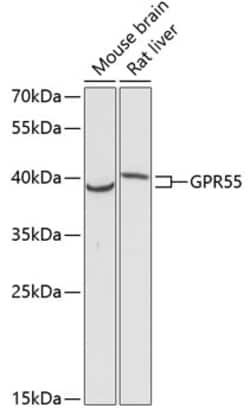
ABclonal Technology GPR55 Rabbit pAb
This gene belongs to the G-protein-coupled receptor superfamily. The encoded integral membrane protein is a likely cannabinoid receptor. It may be involved in several physiological and pathological processes by activating a variety of signal transduction pathways.
ABclonal Technology APC Rabbit anti-Human CD153
The protein encoded by this gene is a cytokine that belongs to the tumor necrosis factor (TNF) ligand family This cytokine is a ligand for TNFRSF8 CD30 which is a cell surface antigen and a marker for Hodgkin lymphoma and related hematologic malignancies The engagement of this cytokine expressed on B cell surface plays an inhibitory role in modulating Ig class switch This cytokine was shown to enhance cell proliferation of some lymphoma cell lines while to induce cell death and reduce cell proliferation of other lymphoma cell lines The pleiotropic biologic activities of this cytokine on different CD30 lymphoma cell lines may play a pathophysiologic role in Hodgkin s and some non-Hodgkin s lymphomas Two transcript variants encoding different isoforms have been found for this gene

Cayman Chemical PROSGlnDN F2a ethyl aMD 10mg
PGF2α-NEt is an analog of PGF2α in which the C-1 carboxyl group has been modified to an N-ethyl amide. PG esters have been shown to have ocular hypotensive activity.{8837} PG N-ethyl amides were recently introduced as alternative prostaglandin ocular hypotensive prodrugs.{8941} Although it has been claimed that PG ethyl amides are not converted to the free acids in vivo,{8941} bovine and human corneal tissue converts the N-ethyl amides of various prostaglandins to the free acids with a conversion rate of about 2.5 UG/g corneal tissue/hr.{9311} PGF2α-NEt would be expected to show the typical intraocular effects of PGF2α free acid, but with the much slower hydrolysis pharmacokinetics of the PG N-amides.